
A Year of Engaging - The Office of Small Business’s First Year
A year ago, the Office of Small Business (OSB) at Prosper Portland officially launched.
It's been a year of engaging, listening, learning, evolving, being present in community, and showing up with an empathetic approach to the work we do. Because for many small business owners, it wasn’t just about hearing a complaint or answering a question. It was about the city seeing the people behind the storefronts, the families juggling two jobs to keep a restaurant open, the immigrant entrepreneurs navigating systems in a second language, the makers building their livelihood one product, demo, and customer at a time.
OSB’s first twelve months included more than 725 direct engagements with small businesses. Some are owners who have been part of the fabric of Portland’s small business community for decades. Others are budding entrepreneurs, still scribbling ideas on the backs of napkins. They represented every district in Portland, from 103 businesses in District 1 to 182 in District 2, 154 in District 3, and 142 in District 4. Others even come from outside city limits, inquiring about resources the city has to offer or just looking to get some answers as they contemplate starting a business. Restaurants and food carts made up the largest share of businesses seeking help (33%), followed by retail storefronts (15%), arts and entertainment (7%), and consumer products (6%).
The Office was designed and built with intention. We want OSB to be relational – not transactional - and serve as a resource and partner for business owners throughout their journey. This approach has resulted in more than 1,600 touchpoints over the year which reflected something deeper: business owners needed help navigating a system that felt too complicated to face alone, and they recognized the OSB can provide that partnership.
Navigating city processes remained the dominant theme: 39% of OSB’s navigation work involved permitting and development, with PBOT, Portland Solutions, and Revenue following behind. Permitting, changing rules and regulations, tax questions, access to capital and grants, livability issues — each step carried its own stress, its own uncertainty. OSB became the place where business owners could talk through it 1:1 with someone who understood the stakes: rent is due, payroll is due, margins are thin, and sales may be down.
Beyond the 1:1 liaison engagements, OSB also launched a website that embodied that same spirit of support, with startup guides, step-by-step instructions, a detailed permitting page that PP&D partnered on with us, community connections, and business management resources - all available in five languages. It was designed to feel like a liaison was walking you through the process – detailed and easy to follow so that business owners didn’t have to spend a lot of time finding the information and resources that they need.
We also wanted to work hard to meet the business owners where they were and not expect them to always be the ones doing the outreach to city government. The team spent the year in the community — at more than 135 events across Portland’s districts, listening at in-district office hours, and hosting webinars on topics that owners often felt too intimidated to ask about: insurance, emergency planning, lease basics, HR, and legal essentials. The office created quarterly Business District meetings where leaders of these districts could talk directly to elected officials or their staff and say, in plain language, “Here’s what’s working. Here’s what’s not.”
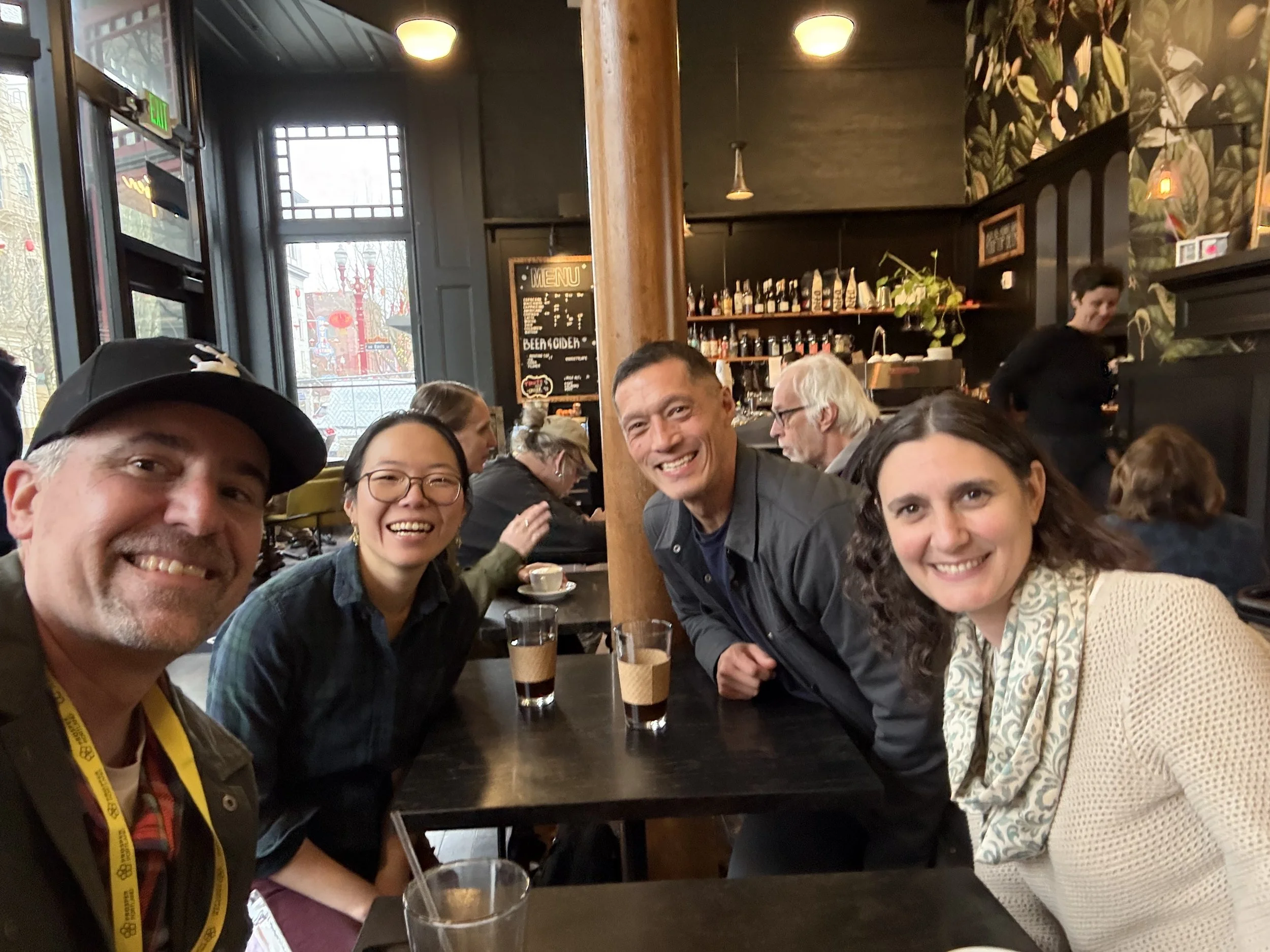
One of OSB’s most visible initiatives is also one of its simplest: the “Show Up for Small Business” series. Every quarter, the office picks a meeting spot and encourages Portlanders to spend an early evening supporting the surrounding businesses. OSB has organized seven such events, with two more underway. The gatherings are part civic boosterism, part economic stimulus — small, hyperlocal, and intentionally community-driven.
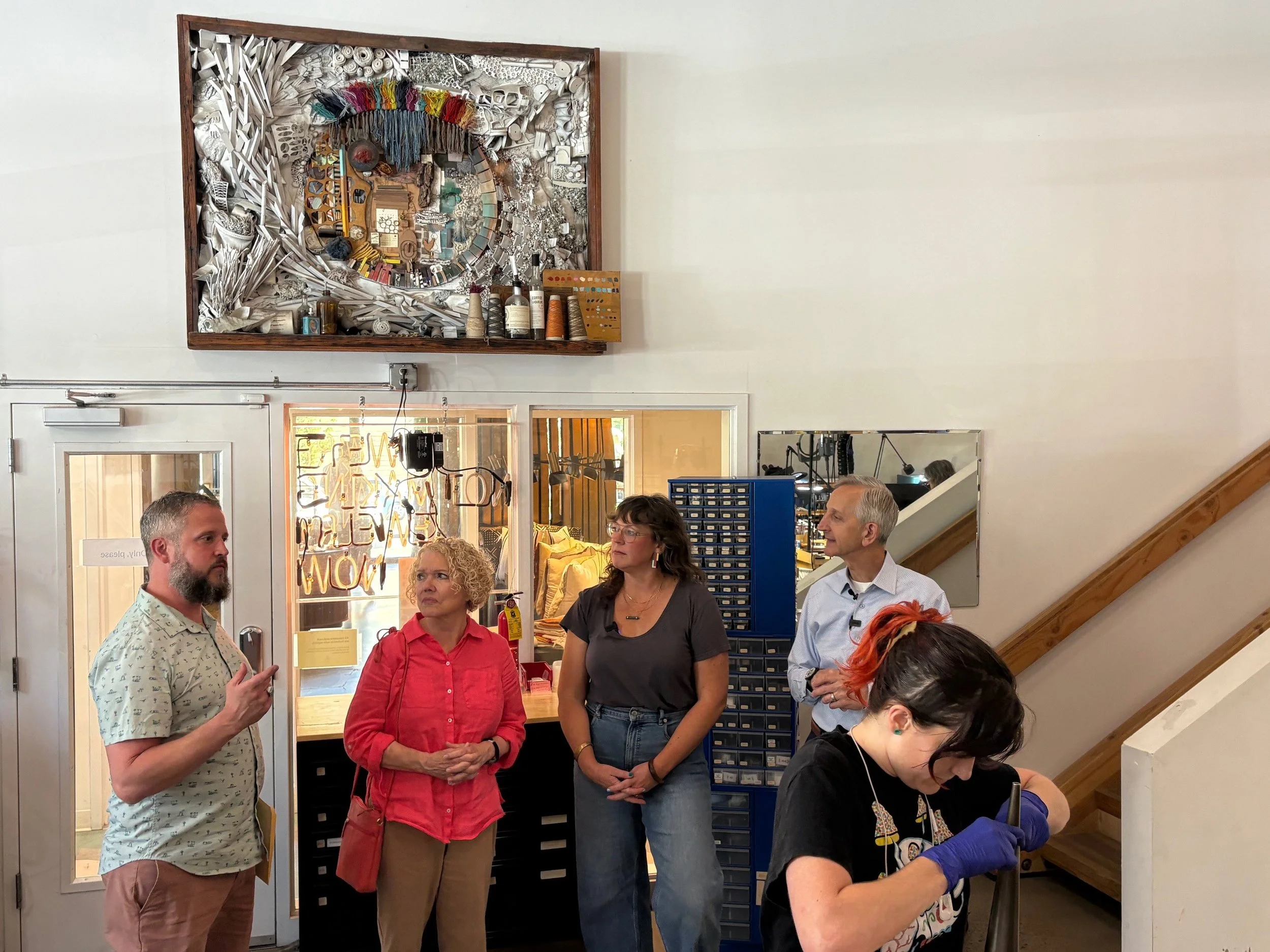
Other efforts were collaborative — from partnering with the agency grants team on outreach for the Repair/Restore, Building Energy Efficiency, and Prosperity Improvement Program grants, to working with the Mayor’s Office on three small business tours that captured the stories behind the city’s small businesses. To streamline that navigation, OSB set up monthly coordination meetings with PP&D, PEMO, and PBOT — a bureaucratic rhythm meant to align processes that historically operated in silos.
"The collaborative effort between PP&D’s Permitting Services team and Prosper Portland’s Office of Small Business has led to a more transparent and efficient path for small business customers to access permitting and property information. It’s just a start and we have a lot of work to do, but our teams work together in a way that make me confident we can help revitalize Portland’s small business community. They are the backbone of our economy and the key to bringing Portland back to life. In addition, the collaboration has helped to make the OSB team more aware and more knowledgeable of what small businesses will encounter during the permit process, which allows the OSB team to be a better small business partner and advocate!"
“PBOT’s partnership with Prosper Portland’s Office of Small Business has been essential to advancing our work. OSB has strengthened our cross‑agency coordination, supported clear and consistent messaging to Portland’s small business community, and served as a trusted conduit for business needs and voices back to PBOT. Together, we’ve been able to share timely construction updates, amplify events like Sunday Parkways, and troubleshoot emerging business concerns before they escalate. This collaboration helps us more effectively center business priorities in our programs and policies, ensuring our efforts truly reflect and respond to the people who use and activate our streets every day.”
The OSB team also helped support initiatives like the Storefront Support Program and the Legacy Business Program, amplifying voices often left out of larger policy conversations.
To humanize the city’s commercial landscape, OSB published more than 30 business profiles — short, intimate snapshots of the people whose work keeps neighborhoods vibrant. On Instagram, the office surpassed 250,000 views, turning the platform into a direct line between the city and the entrepreneurs it serves. The OSB newsletter grew to 531 subscribers, with an unusually high 52% open rate — evidence that people were reading, and that the information mattered.
A year in, OSB’s impact can be measured in numbers, but its meaning shows up in moments. A food cart owner finding clarity on a permit. A storefront getting connected to a grant they didn’t know existed. An artist learning their rights around intellectual property. A business district being more connected to their city government.
Small businesses aren’t statistics. They’re people betting on themselves, often carrying the weight and stress of a dream on their shoulders. OSB’s first year was an attempt to honor that — not with grand speeches, but with presence.
As the office enters year two, the work continues: more coordination, more visibility, more responsiveness. In a city where small businesses serve as cultural anchors as much as economic drivers, the question is no longer whether city support matters. It’s how consistently the city can deliver it. The office’s role remains the same: keep listening, keep showing up, and keep recognizing that behind every business, there’s a person trying to build something that matters.